September 18, 2023
Understanding the Flyback Diode: Your Essential Guide to Functionality and Why You Need One

Share
BuildWithFlux


A curated collection of PCB and hardware projects crafted by our talented Flux community.

A flyback diode is a semiconductor device that is connected across an inductor in a circuit to protect other components from voltage spikes. When an inductive load is suddenly de-energized, the energy stored in the inductor has to go somewhere. The flyback diode provides a path for this energy, preventing damage to other components like transistors.
Inductors store energy in their magnetic fields. When the current flowing through an inductor changes, it induces an electromotive force (EMF) due to its inductance. This induced EMF can be harmful to other components in the circuit, especially sensitive ones like integrated circuits (ICs).
When an inductive load like a solenoid or coil is switched off, the energy stored in its inductance must be dissipated. Without a flyback diode, this energy can cause voltage spikes, leading to arcing across switch contacts and potential damage to ICs.
Transistors are particularly vulnerable to voltage spikes. A flyback diode can protect the transistor by providing a path for the inductive energy to be safely dissipated.
In some applications, a resistor or a snubber circuit may be used in conjunction with the flyback diode to dampen oscillations and further protect the circuit.
Understanding the flyback diode is crucial for anyone dealing with circuits that include inductive elements. Whether you're working with solenoids, coils, or any inductive load, a flyback diode is your go-to component for protecting against voltage spikes and ensuring that energy is safely dissipated. By selecting the appropriate type—be it a standard, Zener, or freewheeling diode—you can optimize your circuit for both safety and efficiency.
A flyback diode is a semiconductor device that is connected across an inductor in a circuit to protect other components from voltage spikes. When an inductive load is suddenly de-energized, the energy stored in the inductor has to go somewhere. The flyback diode provides a path for this energy, preventing damage to other components like transistors.
Inductors store energy in their magnetic fields. When the current flowing through an inductor changes, it induces an electromotive force (EMF) due to its inductance. This induced EMF can be harmful to other components in the circuit, especially sensitive ones like integrated circuits (ICs).
When an inductive load like a solenoid or coil is switched off, the energy stored in its inductance must be dissipated. Without a flyback diode, this energy can cause voltage spikes, leading to arcing across switch contacts and potential damage to ICs.
Transistors are particularly vulnerable to voltage spikes. A flyback diode can protect the transistor by providing a path for the inductive energy to be safely dissipated.
In some applications, a resistor or a snubber circuit may be used in conjunction with the flyback diode to dampen oscillations and further protect the circuit.
Understanding the flyback diode is crucial for anyone dealing with circuits that include inductive elements. Whether you're working with solenoids, coils, or any inductive load, a flyback diode is your go-to component for protecting against voltage spikes and ensuring that energy is safely dissipated. By selecting the appropriate type—be it a standard, Zener, or freewheeling diode—you can optimize your circuit for both safety and efficiency.


Learn how smart vias in Flux automates the selection, placement, and configuration of vias during the PCB design process. This automation reduces the manual effort involved in via placement and significantly lowers the risk of misalignment and other common errors associated with traditional via management.


This blog will explore functional block diagrams, their pivotal role in system design, the symbiotic relationship with ladder logic, structured text, and the broader realm of PLC programming. Why FBDs are so important within complex systems.

Imagine designing a PCB in a third less time than you're used to - that's the power of Flux Copilot's new upgrade, allowing it to wire components together for you. In this tutorial, we'll walk you through the important workflows and example prompts to help you design a Raspberry-Pi-Pico-like board in 20 minutes.


Before you start this exciting journey, it's essential to equip yourself with the right knowledge, tools, and preparations. This article offers practical insights and suggestions to help you lay a strong foundation for your PCB design projects.
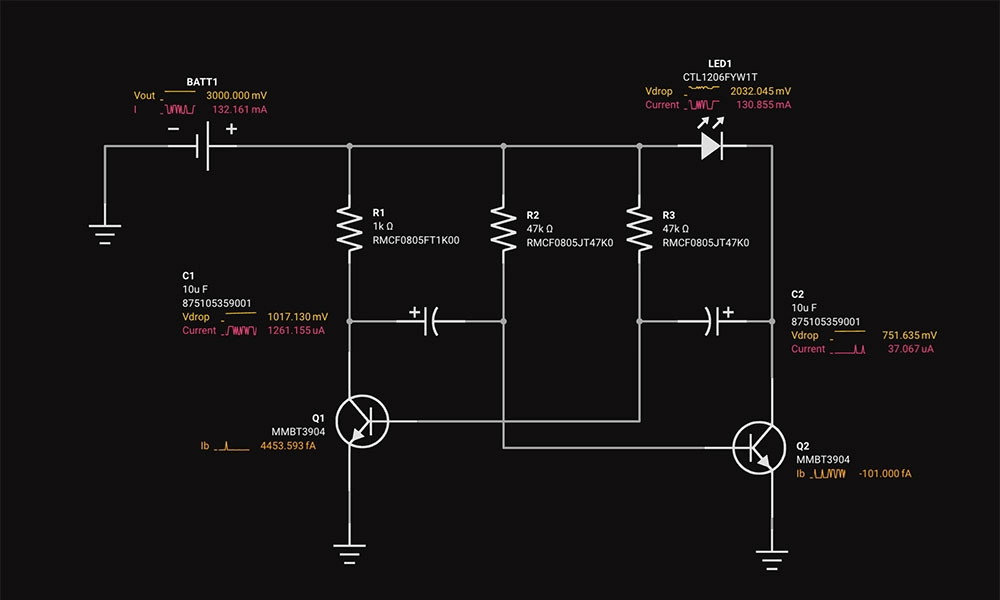
Circuit simulation is a crucial tool in electronic design. It uses software to predict how circuits will perform, saving time and money. Popular options like Flux, LTSpice, and CircuitMaker offer powerful features.

In this blog post, we explore how Flux.ai effectively uses Web Workers and ImmerJS to enhance data replication in our web-based EDA tool. We discuss our challenges with data transfer, our exploration of SharedArrayBuffer, and our ultimate solution using ImmerJS patches.

This blog post explores the fundamental role of diodes in electronics, focusing on understanding their symbols and various types like Zener, Schottky, and LEDs. It details the electrical signal of diodes, illustrating how they allow current flow in one direction.

Arduino and Raspberry Pi are two of the most popular single-board computers used by electrical engineers for various projects. Both have their own strengths and weaknesses, and choosing between the two depends on the specific requirements of a project.

Avoid costly errors in your PCB design with these expert tips! Discover the 5 most common mistakes in trace width, vias, power planes, and more. Learn how Flux’s AI Copilot helps you catch these issues early, ensuring your board is ready for manufacturing.
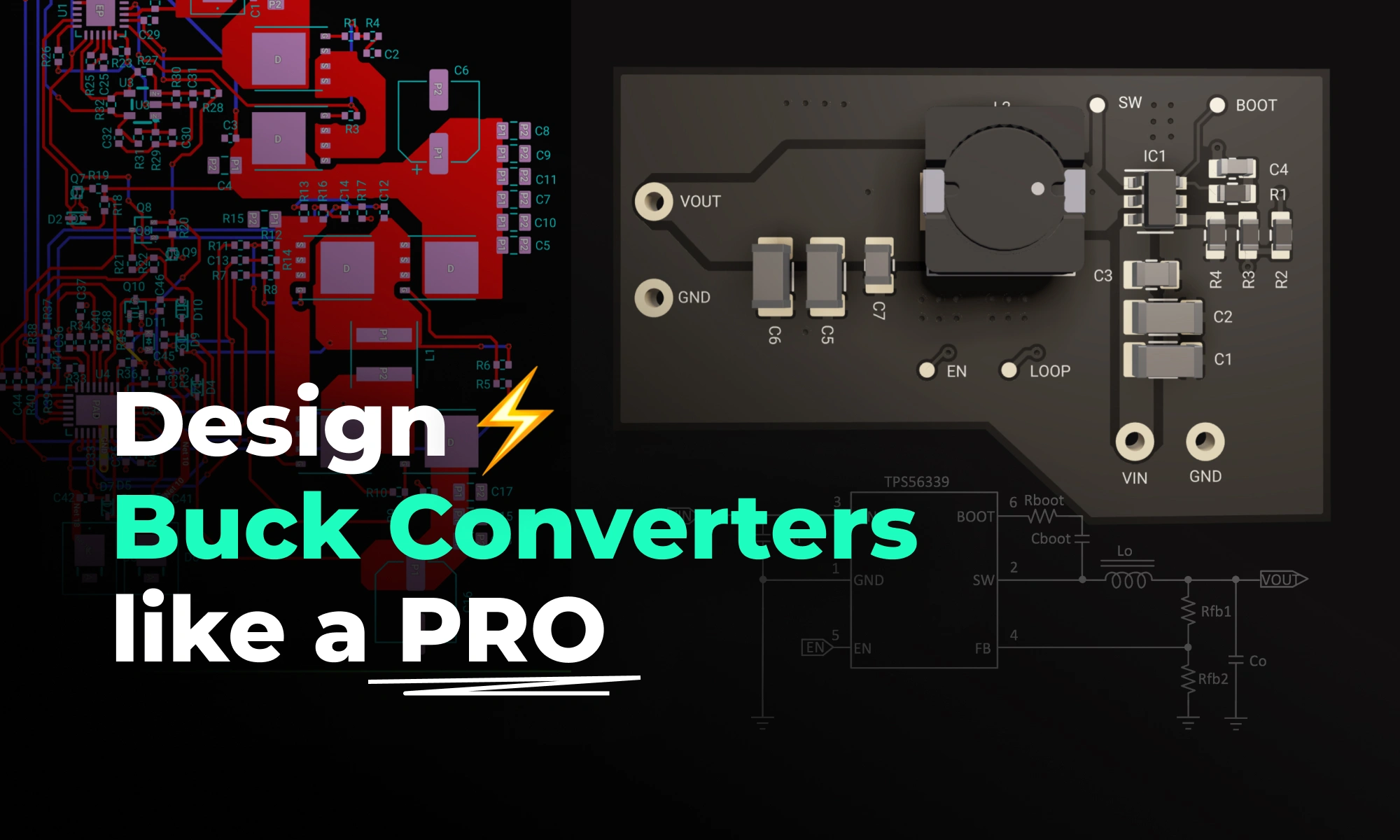
Design high-performance buck converters with proven PCB layout best practices. Cut noise, save space, and optimize your power supply design with this guide.

This comprehensive guide explores the roles and types of electrical connectors in any wiring project. From crimping tools to wire strippers, it outlines the tools and techniques needed for efficient electrical wiring. The post also provides safety tips and insights into specialized connectors.